Mold remediation · Medford, Oregon

Mold Removal Medford Oregon

Get a clear plan to stop the spread, remove contaminated materials safely, and dry the space correctly so the problem does not return.
Controlled containment HEPA filtration Written estimate
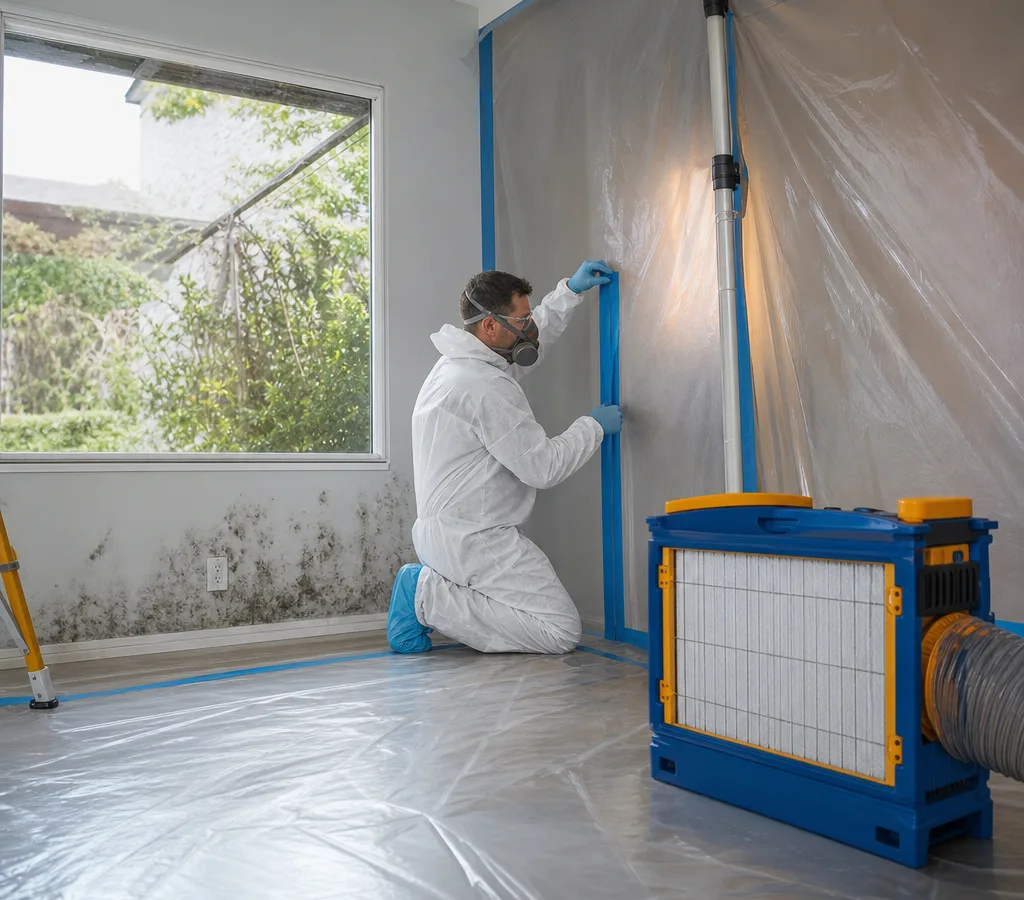
Technician in protective gear working inside mold containment with a HEPA air scrubber in a Medford-area home
Controlled mold cleanup

What mold removal means—and why the cleanup method matters

If you are searching for mold removal Medford Oregon, you are usually dealing with visible growth on building materials or a musty odor and symptoms that point to hidden growth. Either way, the goal is to remove the mold and correct the moisture problem so it does not come right back.

Proper mold remediation is more than spraying something on a wall. Mold is a contamination issue, so the work needs controlled removal, containment, filtration, and post-cleaning verification steps.

  • Identify whether moisture comes from a leak, condensation, past water intrusion, or poor ventilation.
  • Set up containment to keep spores from spreading through the home.
  • Run HEPA air scrubbers to reduce airborne particles during the work.
  • Remove unsalvageable porous materials such as affected drywall, insulation, ceiling tile, or carpet padding.
  • Clean and HEPA vacuum remaining surfaces, then use an appropriate antimicrobial where it fits the material and scope.
  • Dry the structure to normal moisture levels before rebuild work or close-up.

Medford homes often show mold first in bathrooms, laundry areas, under sinks, around windows, and in garages that share air with the house. Crawlspaces and attics can also develop growth when ventilation or vapor control is poor. We limit cross-contamination, protect belongings, and clearly explain what was found and completed.

Request Emergency Service
Inspection and scope

Mold remediation Medford: how we approach an inspection and scope

A good outcome starts with a good scope. Our team looks for both the mold you can see and the conditions that allow it to thrive, then writes a straightforward plan.

What we typically check during a visit:

  • Moisture source and building conditions: We look for active leaks, staining patterns, plumbing penetrations, condensation points, and ventilation issues.
  • Material impact: Non-porous and semi-porous materials may be cleaned. Heavily affected porous materials usually need removal.
  • Extent and access: We determine whether growth is limited to a small area or continues behind drywall, under flooring, or inside cabinets.
  • Containment level: The scope dictates whether localized containment is enough or a larger, multi-room containment is needed.

You will get a written estimate that matches the real scope, not a generic guess. If the situation is connected to a recent leak or flooding, our Water Damage Medford Oregon team can coordinate drying and remediation so the space is stable before it is closed back up.
Request Emergency Service
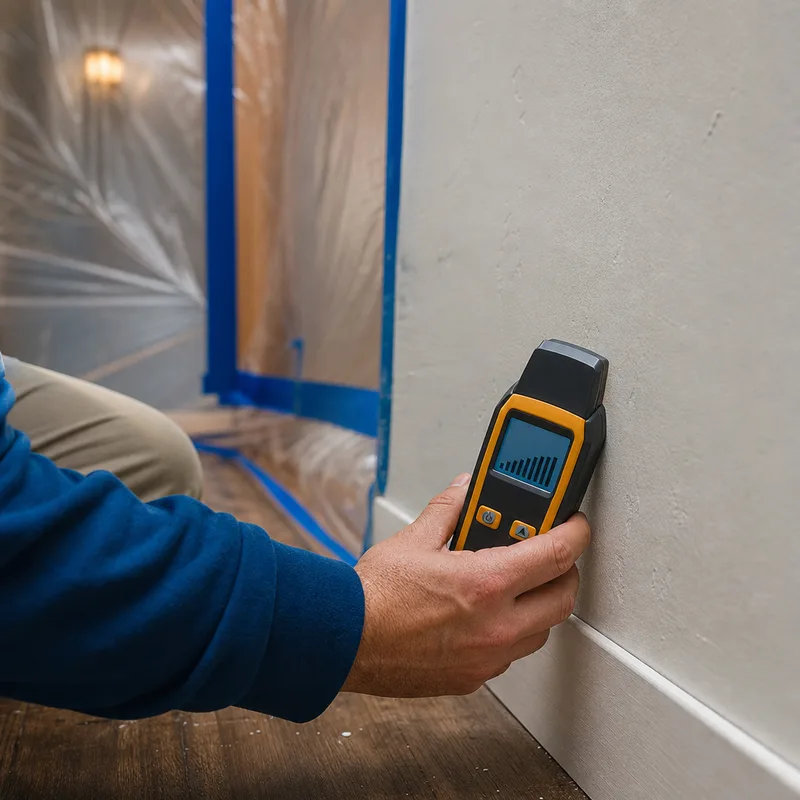
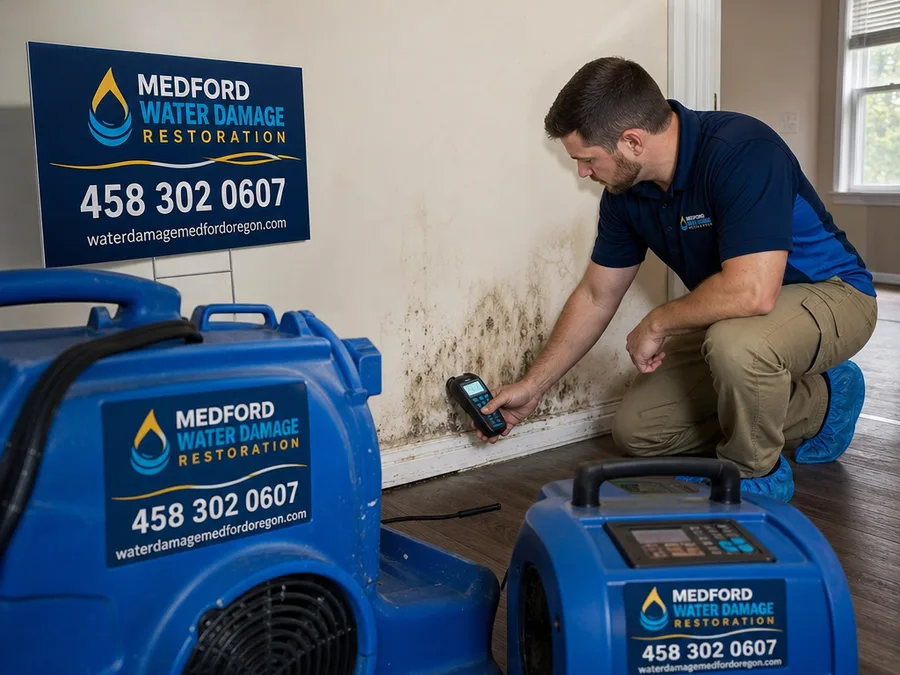
Moisture meter reading on drywall near a baseboard with containment plastic in the background
Professional remediation

What you should expect from a certified mold removal crew

Containment that matches the risk

We use plastic sheeting, critical barriers, and controlled entry so spores and dust stay in the work zone instead of traveling through hallways and HVAC returns.

HEPA filtration during removal

HEPA air scrubbers and vacuums capture fine particles that basic shop vacs recirculate.

Material-specific cleaning and removal

Wood framing, concrete, and some finished surfaces can often be cleaned. Porous materials are handled according to condition and depth of impact.

Drying is part of the fix

If moisture remains in framing or subflooring, mold can return quickly. We confirm drying progress before the area is sealed or rebuilt.

Clear documentation

You get a plain-English scope and timeline explaining what will be removed, what will be cleaned, and what happens next.

Respect for occupied homes

We plan work to protect furniture, keep pathways usable when possible, and maintain a cleaner jobsite in kitchens, bathrooms, and shared living areas.

Clear project pricing

How Much Does Mold Removal Cost in Medford, OR?

Most mold removal projects in Medford typically range from about $1,000 to $6,000+, depending on the size of the affected area and how much material must be removed. A small, accessible spot often falls on the lower end, while multi-room contamination, attic or crawlspace work, and projects requiring significant demolition and drying land higher.

Final price depends on containment needs, HEPA filtration time, material disposal, access constraints, and whether drying equipment is required. The exact cost is confirmed after an on-site inspection and written scope.

Request Emergency Service
Controlled from start to finish

Our mold removal process

Each step limits spread, removes affected material, and prepares the structure for safe repairs.

  1. 01

    Inspect, measure, and map the affected area

    We identify visible growth, moisture conditions, likely hidden spread, impacted materials, and areas needing protection during work.

  2. 02

    Set containment and start HEPA air filtration

    We isolate the work area, protect adjacent rooms, and run HEPA filtration to reduce airborne spores and removal dust.

  3. 03

    Remove contaminated porous materials when needed

    Compromised drywall, insulation, carpet padding, and similar materials are removed, bagged, and handled to reduce cross-contamination.

  4. 04

    Clean, HEPA vacuum, and treat appropriate surfaces

    We clean remaining structural surfaces and scoped contents. Treatments are selected according to the material and job requirements.

  5. 05

    Dry the structure and verify readiness for repairs

    We dry framing, subfloors, and other building materials to normal moisture levels. Once stable, the area is ready for repair or rebuild work.
A controlled work zone

What proper containment and cleanup looks like

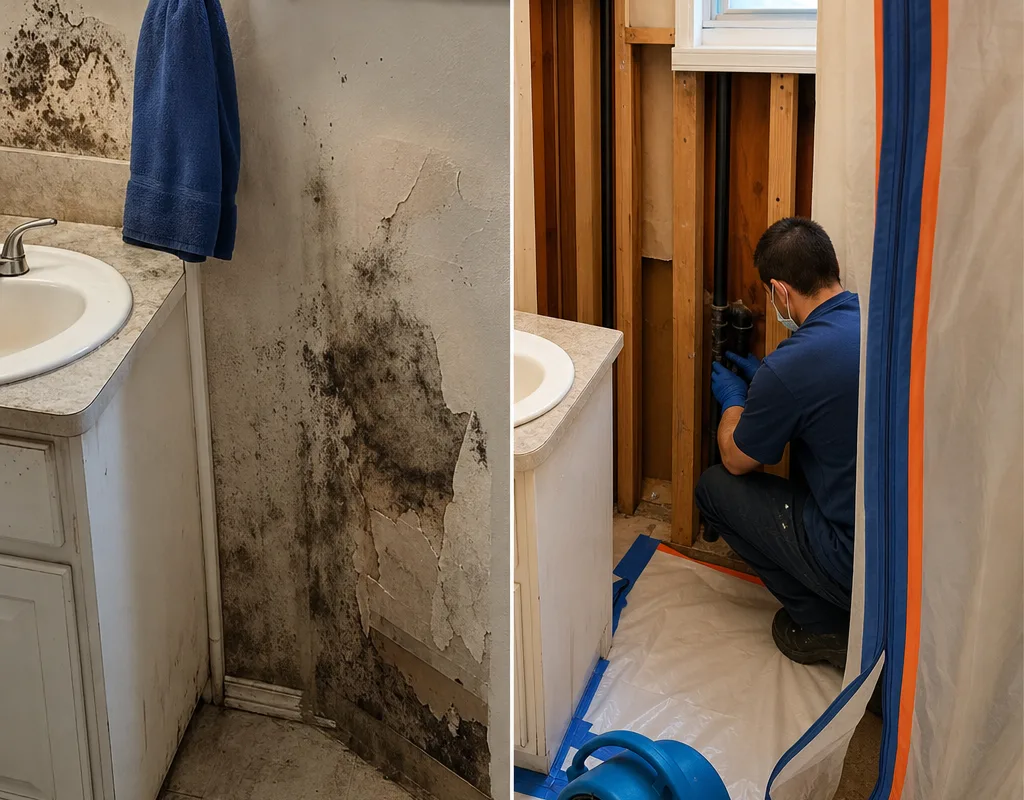
Bathroom vanity area before mold removal and after affected drywall removal with clean framing inside containment
Affected materials are removed within containment before structural cleaning and drying.
Technicians setting up a HEPA air scrubber beside a contained room with protective floor covering
HEPA filtration supports particle control throughout removal and cleanup.
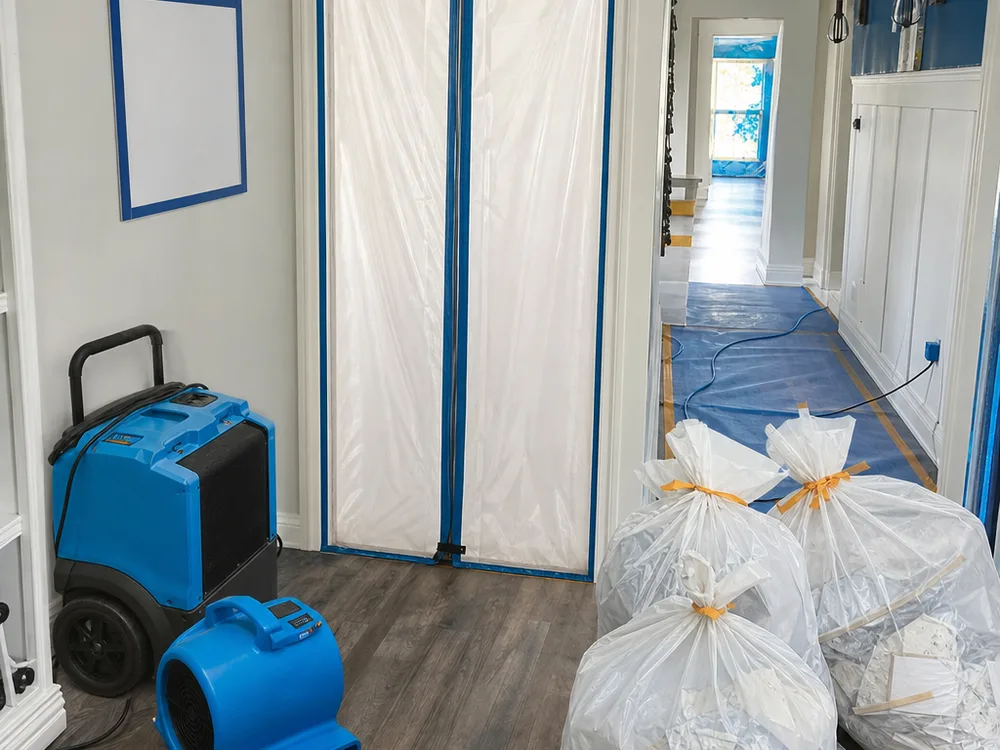
Neat mold remediation containment entrance with zipper door, posted notice, and sealed debris bags
Controlled entry and sealed debris handling help keep adjacent rooms cleaner.
Straight answers

Mold remediation questions we hear in Medford

How long does mold remediation usually take?
Most mold remediation work takes 1 to 3 days for a small to mid-size affected area, while larger or harder-to-access jobs can take longer. Timing depends on containment setup, demolition needs, and whether drying equipment requires additional days.
Can you remove mold without tearing out drywall?
Sometimes, when the affected surface is cleanable and mold has not penetrated porous materials. Moldy or water-damaged drywall and insulation often require removal because they hold contamination and are difficult to clean acceptably.
Is it safe to stay in the home during mold removal?
Many projects can be completed while the home remains occupied when the work area is properly contained. If contamination is widespread, affects HVAC pathways, or occupies a critical space, we discuss practical options before work starts.
Do air scrubbers and HEPA vacuums really make a difference?
Yes. HEPA filtration captures very fine particles and helps control airborne spores released during disturbance and removal. Proper HEPA equipment is a key difference between controlled remediation and basic surface cleaning.
What are common causes of mold in Medford homes?
Common causes include plumbing leaks, slow roof or flashing leaks, past water intrusion that was not fully dried, and condensation from poor bathroom or laundry ventilation. Effective work combines removal with correcting the moisture condition.
Will you test the mold to see what type it is?
Sampling is sometimes useful, but most remediation plans are based on contamination extent and the moisture source rather than species. When testing is needed for documentation, a physician request, or a disputed source, options can be discussed during inspection.
How do I prevent mold from coming back after remediation?
Preventing return depends on moisture control: fix leaks promptly, vent bathrooms to the exterior, manage window condensation, and avoid storing damp items in enclosed areas. After remediation, we identify the moisture driver so you can address the appropriate repair.
Start with a clear scope

Need mold removal in Medford?

Tell us what you are seeing and where it is happening. We will schedule an inspection, explain the containment and cleanup plan, and provide a written estimate you can trust before any work begins.